AI in Retail: The Future is Now
Explore how artificial intelligence is revolutionizing customer experience and operational efficiency in modern retail stores.
How AI is Transforming the Retail Industry
Artificial Intelligence (AI) is no longer just science fiction - it has become an integral part of daily operations in the retail sector. From Amazon Go stores to Alibaba's FashionAI stores, AI-powered retail experiences are spreading worldwide and fundamentally transforming the industry. Today, AI has become a technology accessible not only to large companies but also to medium and small-scale retailers.
5 Key Use Cases of AI in Retail
1. Smart Customer Experience
Artificial intelligence enables offering a unique shopping experience to each customer. By analyzing past purchasing behavior, browsing history, and demographic information, products that exactly meet the customer's needs are recommended. This personalization increases customer satisfaction while significantly boosting sales conversion rates.
For example, if a customer spends more than 5 minutes in the store's sportswear section, the AI system can detect this and show discounted products in that section through their mobile app. Such personalizations can increase conversion rates by up to 35%. Additionally, special offers can be made for products the customer previously viewed but didn't purchase.
2. Predictive Inventory Management
Traditional inventory management methods are usually based on historical data and are reactive. AI, however, proactively predicts future demand by analyzing weather conditions, local events, social media trends, holidays, and many other factors. This prevents both stockouts and reduces excess inventory costs.
A supermarket chain reduced stockouts by 40% and excess inventory costs by 30% with AI-powered forecasting. The system optimizes stock orders by taking into account holidays, school breaks, local sports competitions, and even weather changes. For example, when a rainy weekend is predicted, stocks of products consumed at home are automatically increased.
3. Dynamic Pricing
AI determines the optimal pricing strategy by analyzing competitor prices, demand changes, stock levels, and market conditions in real-time. This way, both profit margins are protected and competitiveness is maintained. Dynamic pricing provides a significant advantage, especially in the fast-moving consumer goods (FMCG) sector.
E-commerce giants have been using this technology for years, but now physical stores can have the same flexibility thanks to digital price tags (ESL - Electronic Shelf Labels). An electronics retailer increased its profit margin by 8% while raising sales volume by 15% with dynamic pricing. The system determines the optimal price by constantly monitoring competitors' prices and immediately responding to demand changes.
4. Image Recognition and Shelf Analysis
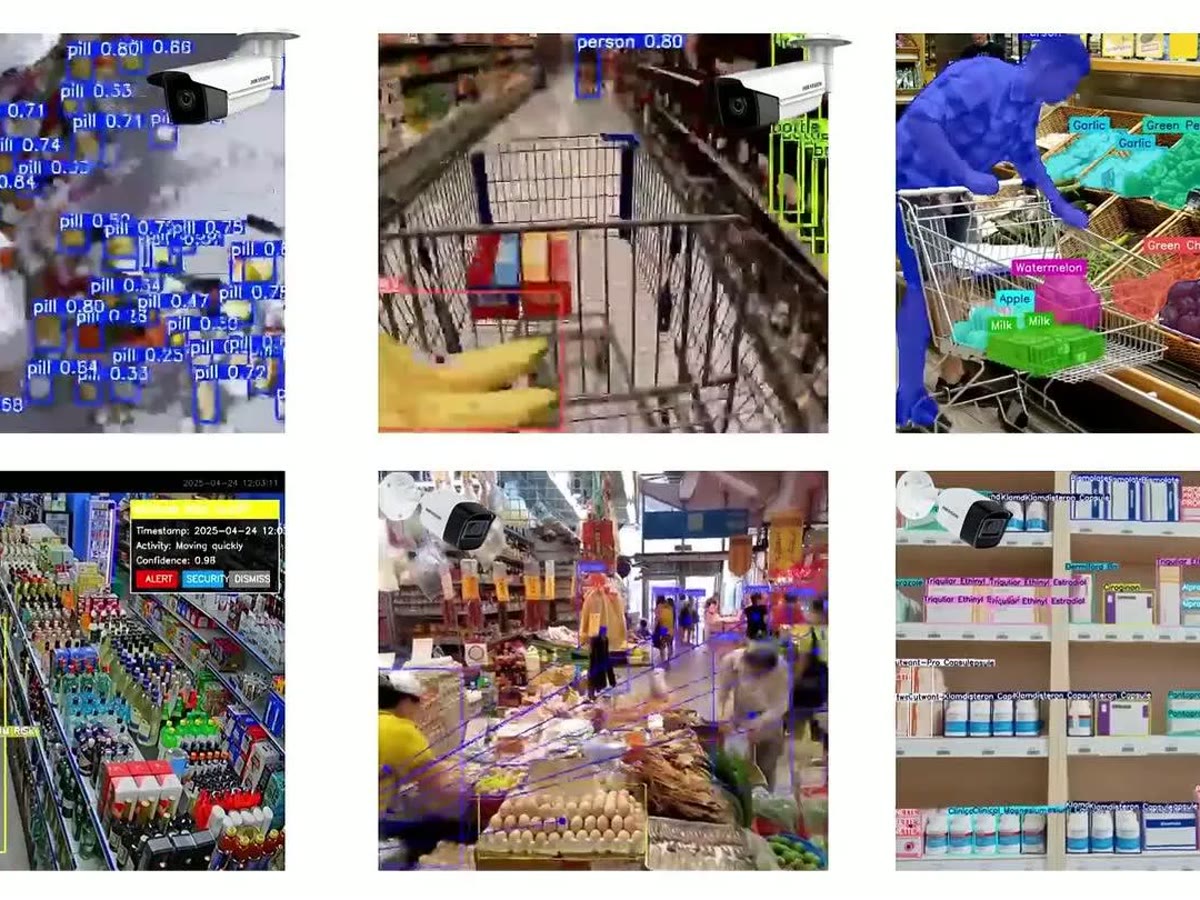
AI-powered cameras and image recognition systems automatically check shelf occupancy rates, product placement, and planogram compliance. When a product runs out or is placed in the wrong location, the system immediately alerts staff. This both increases customer satisfaction and prevents sales losses.
Additionally, it can detect which products customers pick up but don't buy. This information can be used to improve product packaging, pricing, or placement. For example, if a product is frequently picked up but not purchased, this may indicate a price or packaging issue.
5. Cashierless Stores
The cashierless store concept pioneered by Amazon Go is the pinnacle of AI and computer vision technologies. Customers enter the store, take the products they want, and leave - payment is made automatically. Cameras and sensors track which products customers take and automatically charge their accounts.
This technology is no longer a luxury accessible only to large companies. Medium-sized retailers have also started implementing similar systems and reduced wait times to nearly zero. Cashierless stores are becoming especially popular in busy city centers and airports.
Important Considerations in AI Implementation
Data Quality: AI systems only produce accurate results when trained with quality data. Structure your data collection processes in compliance with GDPR and KVKK. Regularly clean and update your data. Incorrect or incomplete data negatively affects AI system performance.
Team Training: No matter how advanced AI tools are, they are worthless without the people who use them. Train your team on using AI tools and interpreting results. Organize regular workshops and increase your team's confidence in AI.
Gradual Transition: Don't hand over all your operations to AI at once. Start with small pilot projects, measure results, and scale successful ones. This approach both reduces risk and makes it easier for your team to adapt to the system.
Customer Privacy: Keep customer privacy at the forefront when using AI. Transparently share what data you collect and how you use it. Inform your customers about data collection processes and obtain their consent.
The Future: AI and Human Collaboration
The purpose of AI is not to replace humans but to empower them. The most successful retail operations are those that combine AI's data analysis and prediction power with human creativity and empathy abilities. AI automates routine and repetitive tasks, allowing employees to focus on more valuable work.
For example, AI can detect that a customer is dissatisfied, but the empathy and creativity needed to satisfy that customer still belong to humans. AI ensures staff are in the right place at the right time; staff perfect the customer experience. This collaboration both increases operational efficiency and maximizes customer satisfaction.
Conclusion: Be Ready for the Future
Artificial intelligence has become a "must have" rather than a "nice to have" in the retail sector. Your competitors are probably already making AI investments. Take action today to avoid falling behind. AI technologies are becoming more accessible and cost-effective every day.
Experience tomorrow's retail experience today with EscherSense's AI-powered retail analytics platform. Contact us immediately for a free demo and discover how AI can add value to your business!